Fire residue behaves differently depending on what burned.
Fire and smoke contamination assessment, cleaning, odour control, contents and remediation planning — identifying residue type before deciding how a property is safely recovered.
Identifying the fire and residue type is key to preventing further damage, restoring air quality and ensuring a complete recovery.
Every fire leaves a different residue
Synthetic residue
Source Plastic or rubber fires.
Residue Greasy, smeared soot with a strong odour.
Approach Solvent-based solutions and odour neutralisers.
Fuel oil
Source Malfunctioning oil heating systems.
Residue Oily, black soot that clings to walls and fabrics.
Approach Industrial-grade degreasers and specialist cleaning agents.
Protein residue
Source Kitchen fires — burnt food, grease.
Residue Invisible film with a pungent smell and yellow discolouration.
Approach Detailed cleaning of all surfaces with targeted deodorisation.
Dry smoke
Source Fast-burning organic materials such as paper and wood.
Residue Dry, powdery soot. Fine and chalky.
Approach Lifted using dry sponges, vacuums and light agitation without moisture.
TESTING AFTER A FIRE
Testing shows what a fire has left behind
Determines chloride contamination after fires where plastics or synthetics have burned; chlorides turn corrosive when exposed to moisture.
Chloride testing
Measures airborne particulates, pollutants and humidity to confirm when indoor air is safe to reoccupy.
Air quality monitoring
PROTECTION AND CLEANING
Contained work areas, controlled cleaning
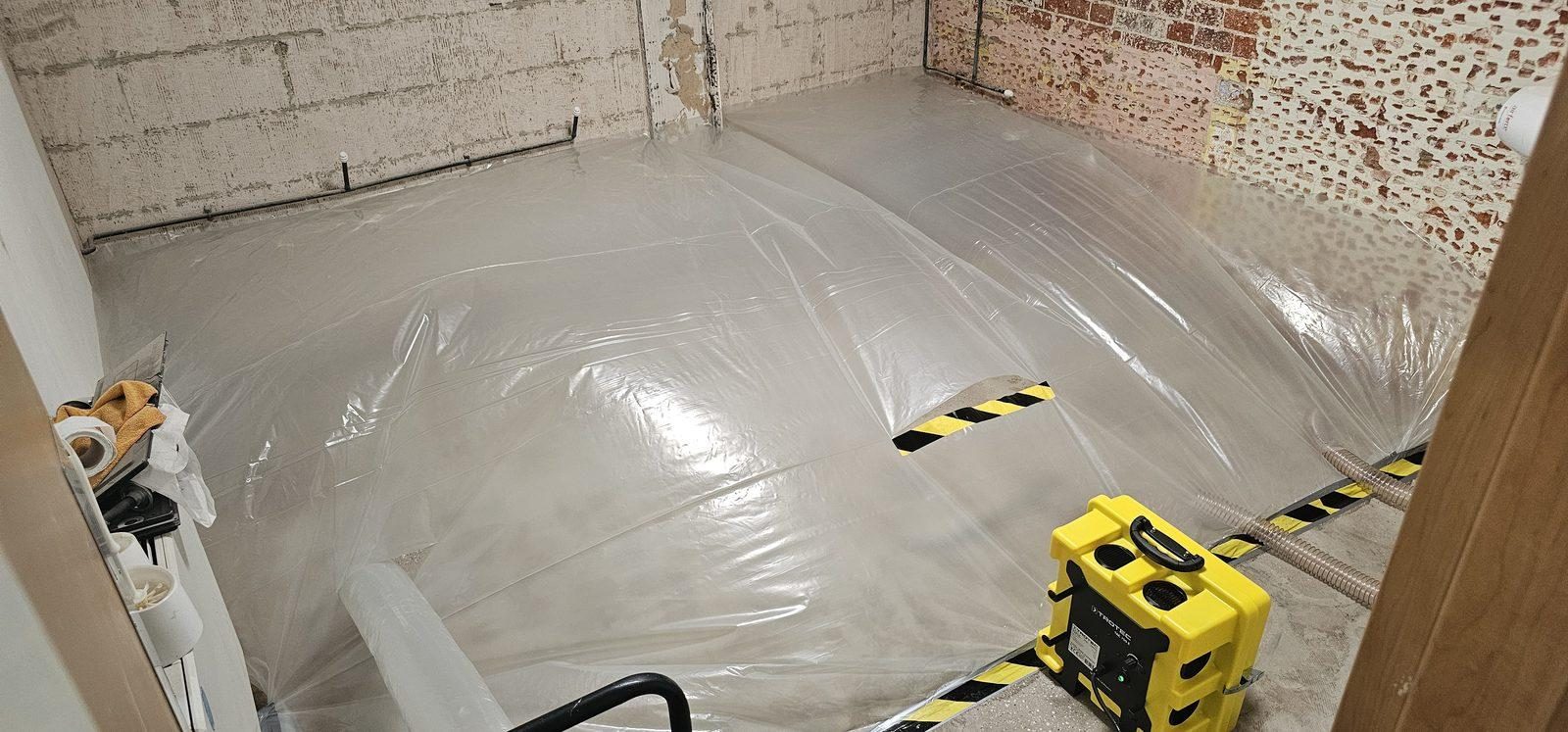
Work areas are protected and contained before intrusive works begin. Response covers smoke and odour removal, deep cleaning and sanitisation, and contents and remediation planning.