Noble assesses the construction, maps the affected scope, identifies concealed moisture and selects drying or strip-out methods in proportion to the evidence. Progress is monitored at repeatable locations, and completion is based on material condition, comparison points and drying trend.
Restoration starts by establishing where the water came from, because that decides both the health risk and the action needed.
Source sets the risk
Black water
Source Sewage, flooding, or water with biological waste.
Risk High. Can contain pathogens and hazardous waste.
Action Immediate containment, sanitation and safe disposal of affected materials.
Grey water
Source Used water from showers, sinks or washing machines.
Risk Contains contaminants and poses a moderate health risk.
Action Disinfection alongside drying and material removal.
Clean water
Source Freshwater leaks from pipes, tanks or appliances.
Risk Low if addressed quickly, but can worsen over time.
Action Prompt drying prevents mould growth and material breakdown.
CONSTRUCTION INVESTIGATION
Opening up, only where the evidence supports it
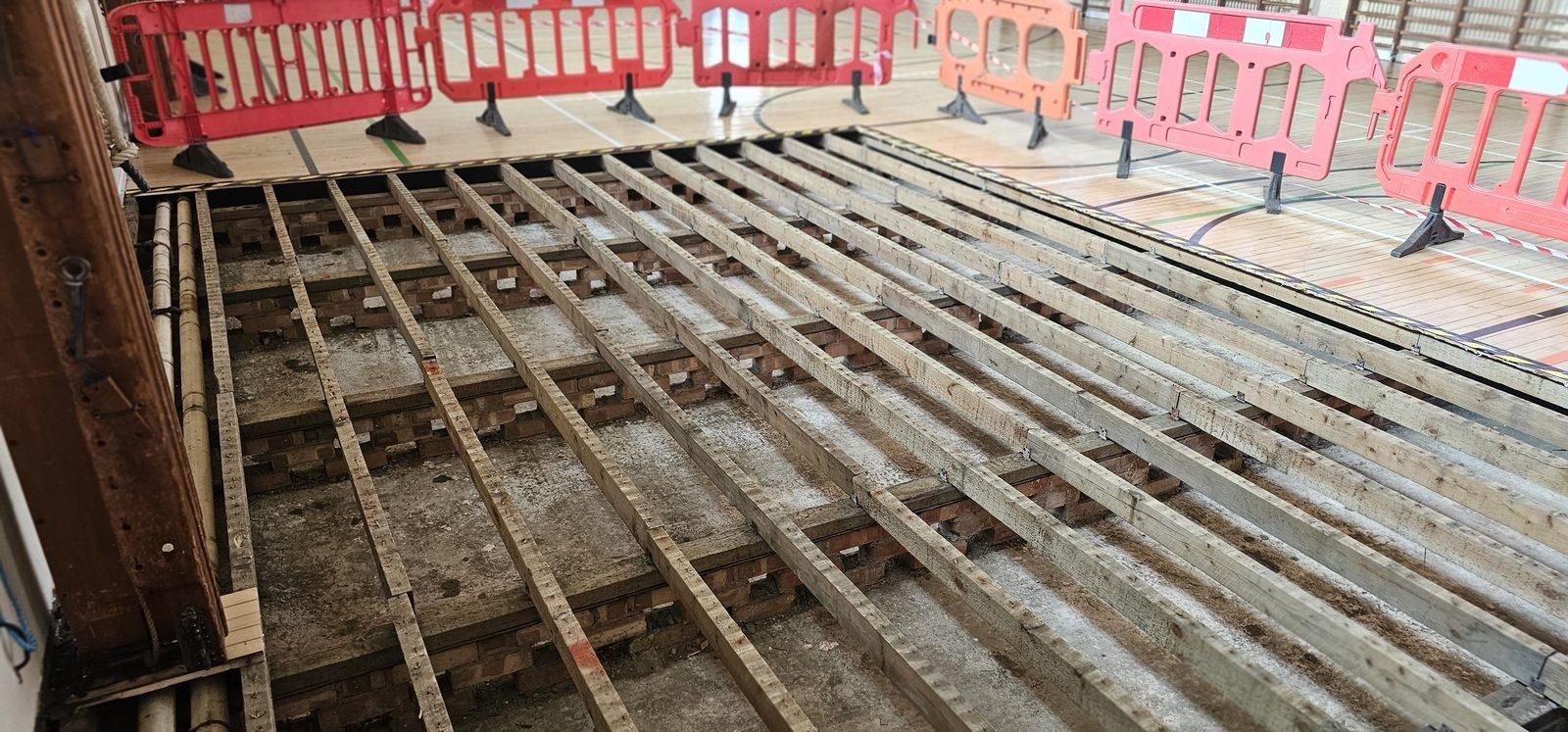
Concealed moisture sometimes requires proportionate opening-up before drying can be verified. Flooring or low-level finishes are removed selectively, preserving sound construction wherever practicable rather than stripping out indiscriminately.
DRYING YOU CAN MEASURE
Structural drying, tracked and documented
Removes airborne moisture to stabilise humidity and prevent secondary damage such as mould or rot.
Dehumidification
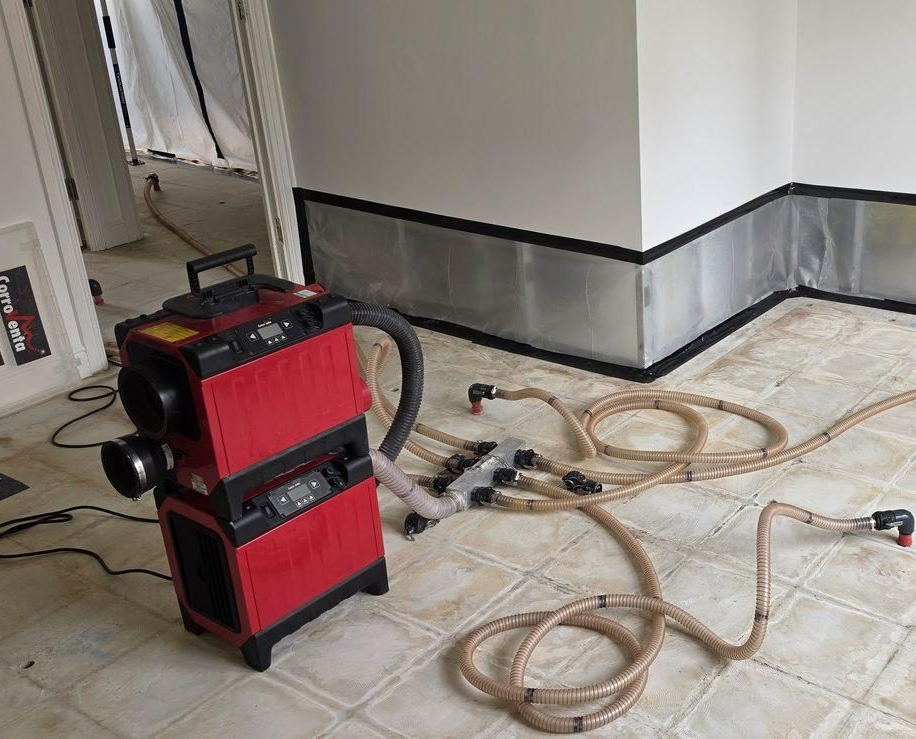
Increases evaporation from wet surfaces such as flooring or plasterboard.
Air movement
Controlled heat accelerates evaporation in dense materials or colder environments.
Heat drying
Meters and thermal imaging track drying progress and support insurance documentation.
Moisture monitoring
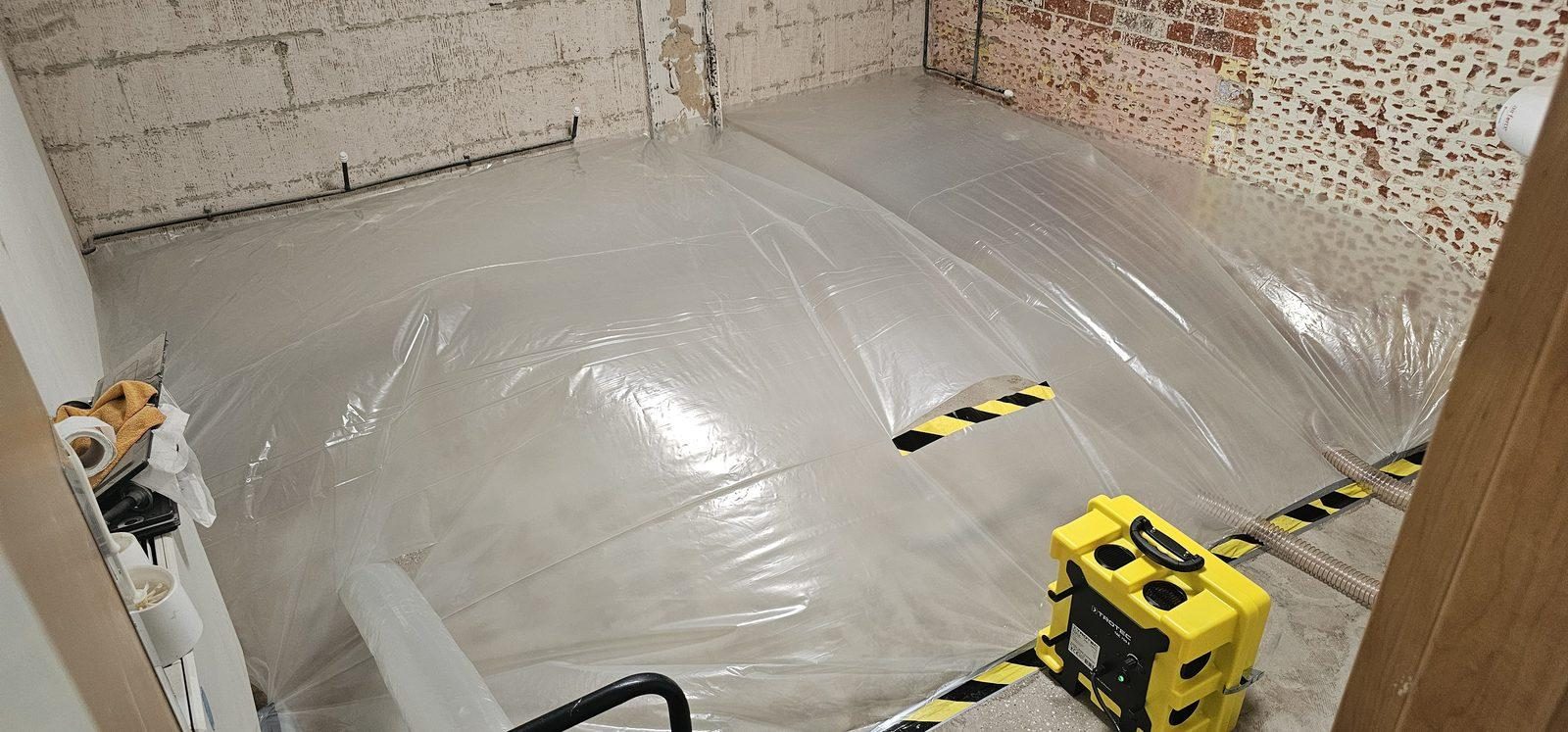
A representative sequence: controlled opening-up through to targeted, monitored drying.
Selective strip-out and structural drying
Monitoring / verification
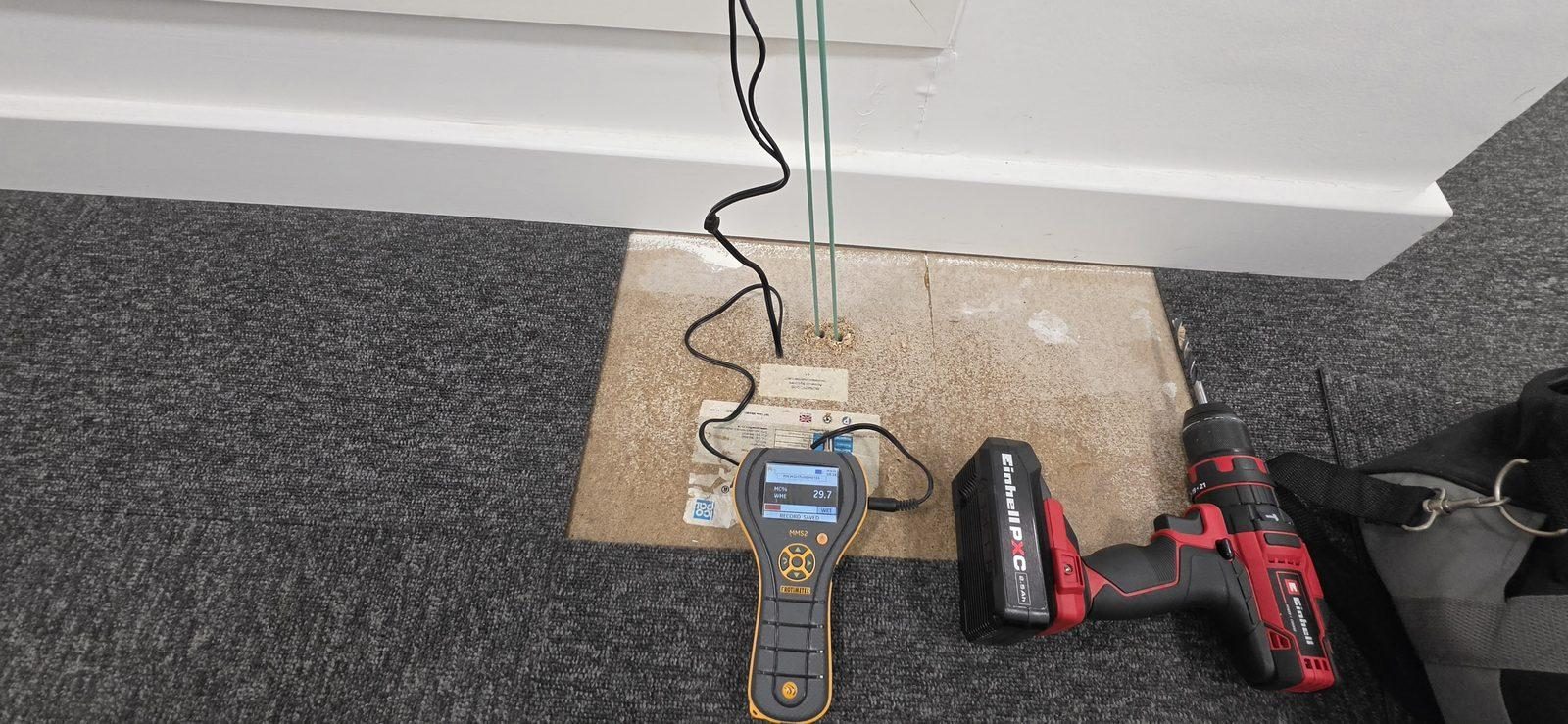
Comparative moisture reading at floor perimeter
Repeatable monitoring points and comparative readings support evidence-based drying verification, rather than relying on a single isolated reading.
Progression
Controlled opening-up to targeted drying
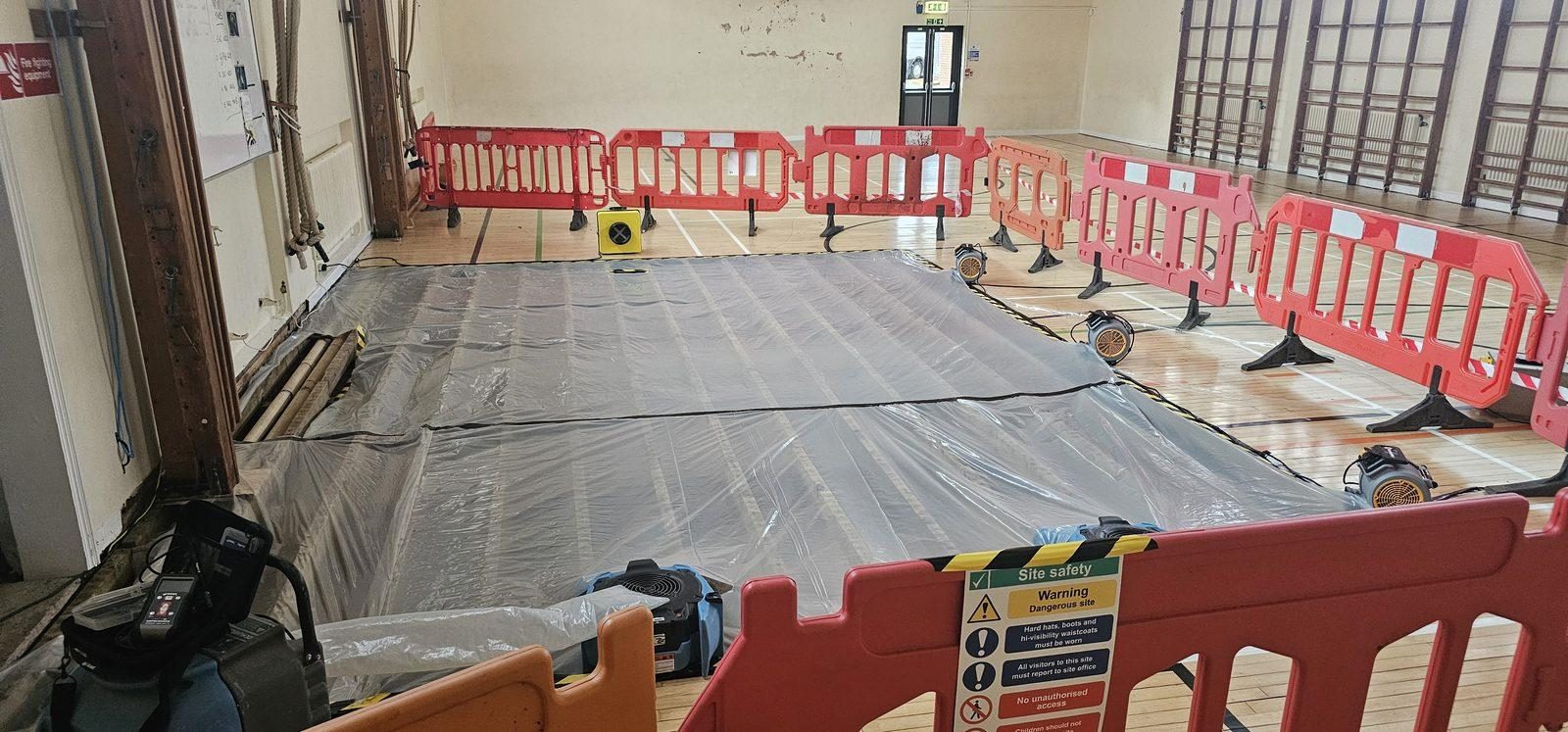
Barriers and floor protection isolate the work area; low-level finishes are removed selectively; drying equipment is then arranged to address retained moisture within the floor build-up.
PROTECTION IN OCCUPIED PROPERTIES
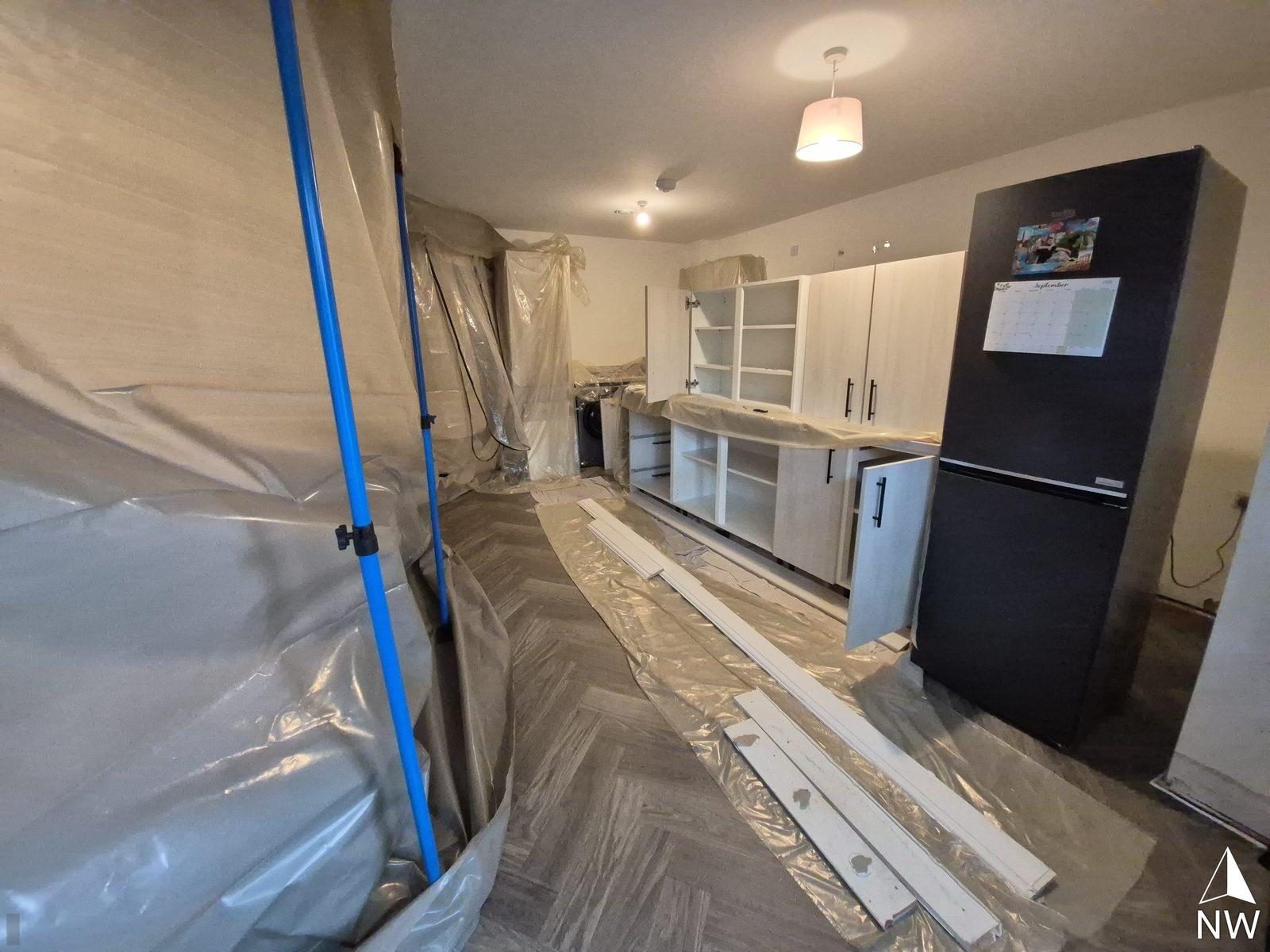
Proportionate work-zone control
Retained finishes and contents are protected while low-level materials are removed, keeping disruption proportionate for residential and high-value properties alike.
Retained finishes and contents are protected while low-level materials are removed, keeping disruption proportionate for residential and high-value properties alike.