Home / Services / Surveying, Testing & Consultancy
Measure first. Intervene where the evidence supports it.
Moisture mapping, environmental readings, endoscopic inspection, salts screening and targeted intrusive investigation combine to define the true scope of damage and reduce unnecessary removal. Findings are translated into concise technical reports, scopes and cost estimates.
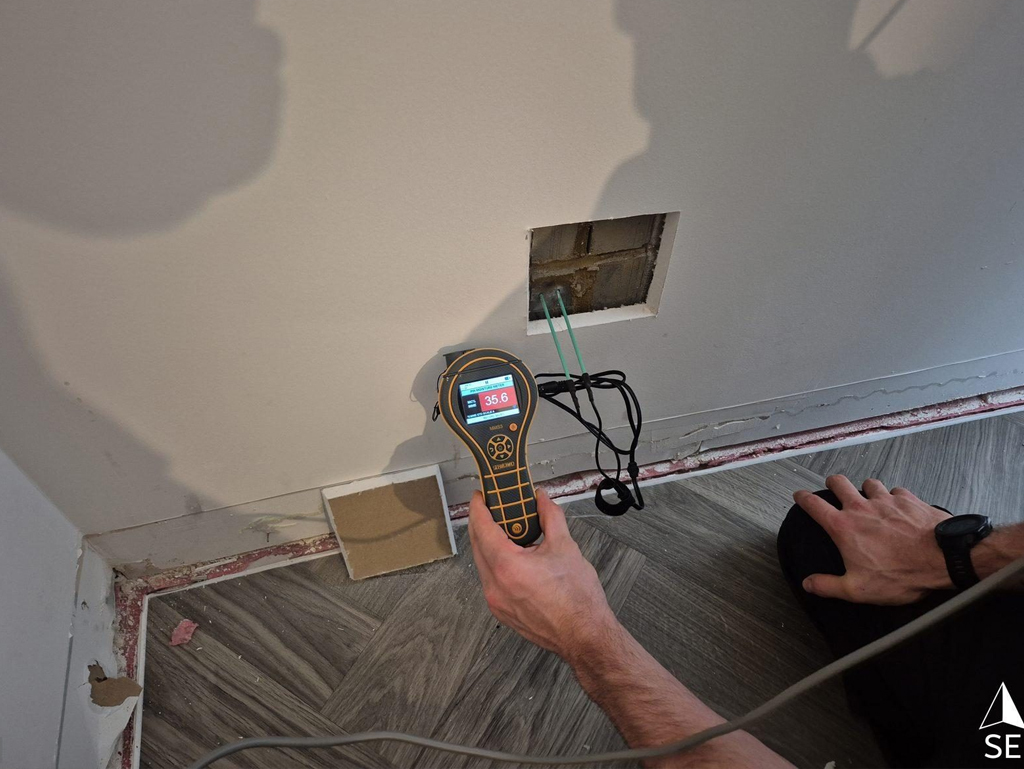
Material moisture is tested at defined, repeatable locations at wall and floor junctions, rather than relying on visual inspection alone. Readings are photographed and mapped so decisions can be traced back to the evidence that supports them.
MINIMALLY INVASIVE TESTING
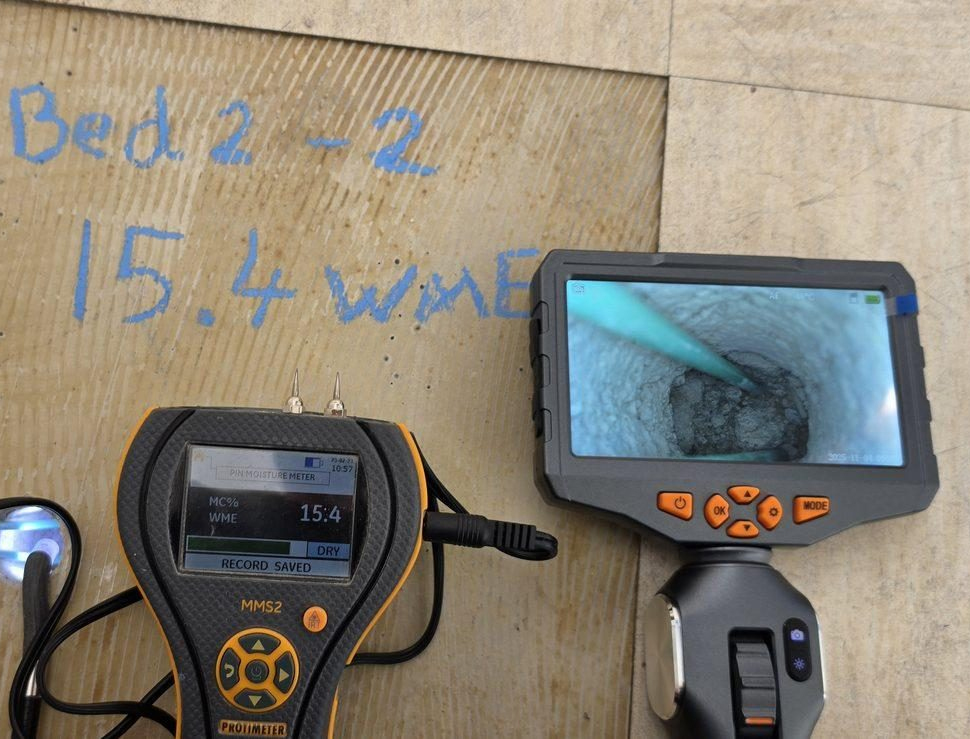
Endoscopy before wholesale removal
Combined moisture testing and borescope inspection assess concealed building elements without unnecessary wholesale removal — a strong technical method for confirming scope before mitigation begins.
DIFFERENTIAL ASSESSMENT
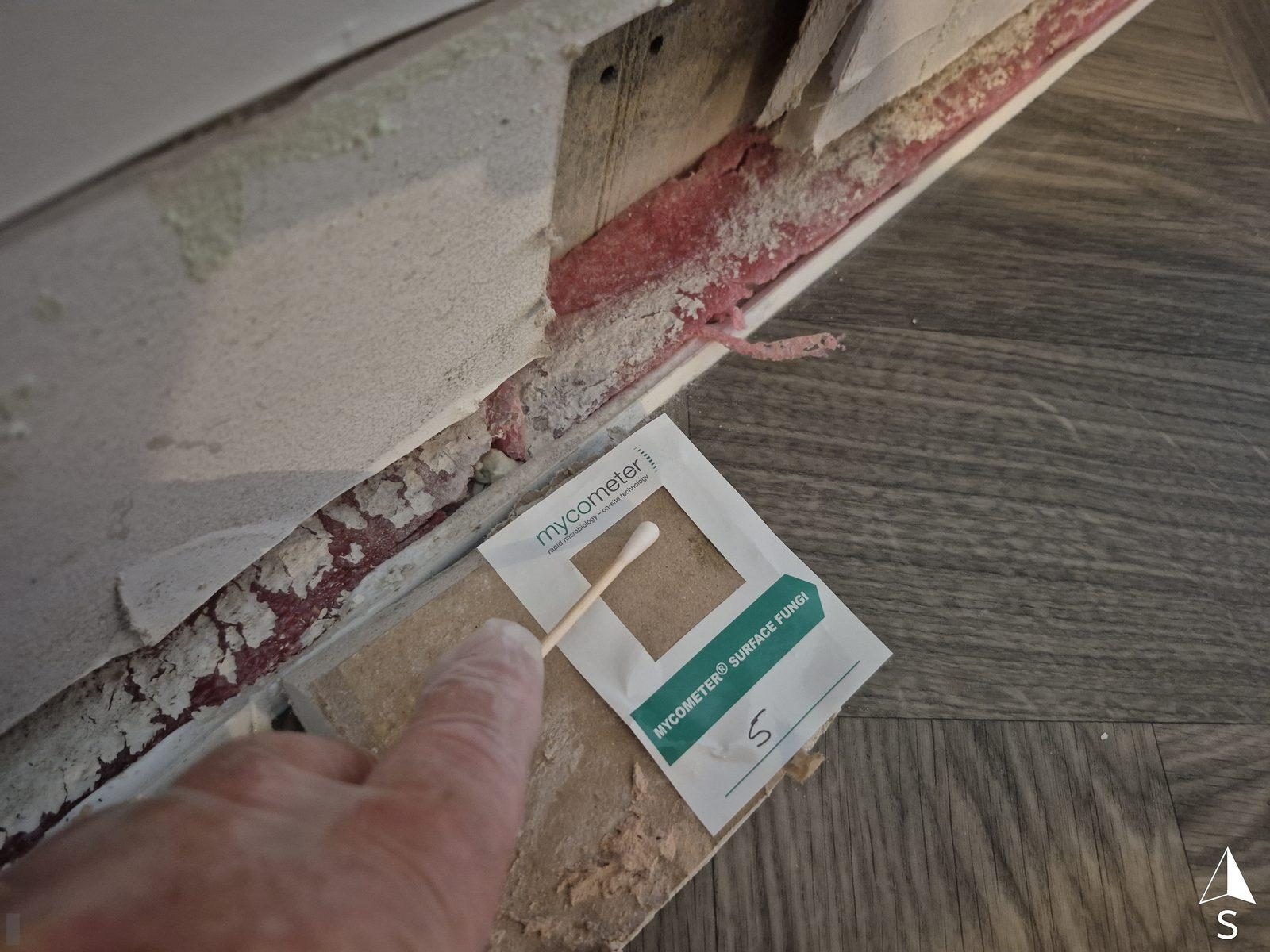
Salts screening to support moisture diagnosis
Field testing at an exposed wall or plaster interface. Moisture diagnosis may include additional testing where salts, historic damp or alternative moisture mechanisms could affect interpretation.
Contamination, moisture, air quality and material safety, assessed after the incident. Every test supports quality, safety and transparency.
On-site testing
Moisture content testing
Purpose Determines exact moisture content within solid walls and floors.
Chloride testing
Purpose Determines chloride contamination on materials after fires involving plastics or synthetics.
Why it matters Chlorides become corrosive when exposed to moisture.
Salt analysis
Purpose Identifies salts (nitrates, chlorides, sulphates) following water ingress.
Use Post-flood, rising damp scenarios, differentiating water sources.
Why it matters Untreated salts can cause long-term structural and surface damage.
Asbestos testing
Purpose Identifies suspected asbestos in materials such as tiles and textured coatings.
Air quality monitoring
Purpose Measures airborne particulates, pollutants and humidity.
Use After fire damage, mould outbreaks, or during drying.
ATP hygiene swabbing
Purpose Rapid hygiene verification for contamination on surfaces.
Use Post-flood sanitation, kitchens, care settings, high-touch areas.
Contamination, moisture, air quality and material safety, assessed after the incident. Every test supports quality, safety and transparency.
Surveying and consulting
Damage reporting
Purpose Detailed reports documenting the condition of the property and contents post-disaster.
Use Insurance claims, restoration timelines, safety compliance.
Expert consultation
Purpose Guidance on restoration techniques and strategies for fire and flood-affected properties.
Why it matters Supports the most effective, cost-efficient approach.
Property survey
Purpose Thorough inspection following fire or flood damage.
Why it matters Early, comprehensive surveys prioritise necessary actions and prevent further deterioration.
Technical records built for claims decisions.
Reports distinguish observed facts, information reported by others, interpretation and limitations. Moisture readings, photographs, equipment records and scope decisions are traceable so that adjusters, insurers and property professionals can review the rationale efficiently.